
When the One Beside You Is Gone
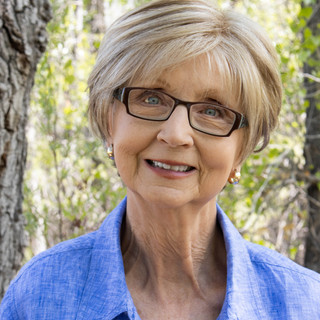
By guest writer, Dianna Carroll
Finding God in the Valley of Widowhood
“Father of the fatherless and protector of widows is God in his holy habitation”(Psalm 68:5).
Shock and grief engulfed me. My husband had just died. I was alone in a Mexican hospital, far from family and friends, with a thousand unanswered questions racing through my mind. What do I do now? How will I get us home? How can this possibly be happening? One moment, I was a wife. The next, I was a widow.
How do I describe what happens when the person who has shared my life is suddenly gone? For many widows, the first word that comes to mind is numbness—a lack of feeling, an emotional paralysis. A widow may find herself asking, Did this really happen, or am I dreaming? Will I be all right? What will I do now?
The loss is so overwhelming that life

fragments; a life, once whole, lies in
pieces. The world continues moving,
but hers has suddenly stopped. I
remember being unable to remove
anything from my husband's closet
for months. Somehow, putting away his clothes felt like losing him all
over again. I even kept the last water
bottle he had drunk from and eventually tucked it away in a dresser drawer. Perhaps that sounds strange to someone who has never experienced profound loss. However, grief has its own language—one that does not make sense to anyone except the one who is grieving. Every widow grieves differently. There is no formula, no timetable, and no right way to walk through the valley.
Eventually, when I was ready, I gave another pastor the new suits my husband had purchased following his long, difficult surgery, the procedure we hoped would remove the cancer that had ravaged his body. Nearly every day, for months, I went to the cemetery. There, I sat beside his grave, sometimes saying nothing, sometimes simply weeping. I didn't know what else to do.
The God Who Sees the Widow
It is difficult for those who have never experienced widowhood to fully understand the depth of the loss. A widow isn't simply grieving the death of her husband. She is learning how to live an entirely different life. The routines of yesterday suddenly become reminders of what is missing. For instance, she may have gone to church every Sunday with her husband. Now, she drives there alone.
Bedtime can become one of the hardest parts of the day. She is accustomed to sharing the events of the day, talking about what happened, perhaps laughing together about something that seemed insignificant at the time. Then when she turns off the light, his side of the bed remains empty. The snoring that once annoyed her is silenced. The familiar voice no longer speaks. The warmth beside her is gone. In the stillness of the night, the tears come.
During such pain and loss, Psalm 68 offers a beautiful reminder to women who find themselves in that lonely place: “A father of the fatherless and a protector of widows is God in his holy habitation” (Psalm 68:5). God does not overlook the widow. He sees her. He knows her loneliness. He understands her sorrow. He is her defender, advocate, guardian, counselor, teacher, and refuge. What a comfort it is to know that when everyone else has gone home, God remains.
Finding God in the Wilderness
My Lord proved wonderfully faithful to me during those difficult days. Widowhood brought a devastating season of loss, not only for me but for my entire family. Yet God met all of us there, at the place of pain.
He walked with me through the valley of the shadow of death. He prepared a table for me in the wilderness, and somehow, even during times of unimaginable sorrow, my cup began to overflow: “Even though I walk through the valley of the shadow of death, I will fear no evil, for you are with me” (Psalm 23:4). I lingered in God's Word, day after day. I had no idea how I would face the future, but He gave me strength for one day at a time. My journey through widowhood was hard, but the Lord used that wilderness to change my life forever. He reminded me again and again: “The LORD is my shepherd; I shall not want” (Psalm 23:1).
I honestly don't know how I would have survived those days without the unwavering love and support of family and friends. In some of my darkest moments, friends even sent money to help with funeral expenses and hospital bills. My husband and I had traveled to Rosarito Beach, Mexico, seeking treatment at Oasis of Hope Hospital. Friends generously helped with everything from airfare to treatment expenses. The treatment we had hoped for never took place. My husband died in Mexico before treatment could begin. Yet even in that tragedy, I saw God's provision. He knew what we needed before we knew we needed it. Through the kindness of others, He reminded me that He remained my Shepherd.
A Widow Needs More Than Words
Widows need practical help, but they also need something that cannot be purchased or arranged on a checklist. They need these types of companions:
· Someone who will stay.
· Someone who will sit beside them without rushing.
· Someone who will listen to the same story again and again.
· Someone who won't be uncomfortable when the tears come.
· Someone who understands that sometimes there are no words.
We all need someone who will simply sit with us and listen to our hurts. Widows are no different. Regardless of their ages, circumstances, or positions in life, they need to know that they still belong. Loneliness can become one of the heaviest burdens of widowhood. A phone call, a visit, an invitation to lunch, or an hour spent sitting together can communicate something profoundly important: You have not been forgotten.
Paul tells us, “Bear one another's burdens, and so fulfill the law of Christ” (Galatians 6:2). What is the law of Christ? It is this: “You shall love your neighbor as yourself” (Galatians 5:14) Sometimes loving a widow means doing very simple acts that start with showing up. Call her. Sit with her. Listen to her. Cry with her. And don't expect her grief to follow your timetable, for there is no expiration date on grief.
There Is Still a Morning Coming
Nothing can fully prepare any of us for the sting of death. We can know what Scripture says. We can believe God's promises. We can trust His character. Still, when death comes, the pain is real, sharp, relentless. However, grief is not the end of the story. During my own journey through widowhood, this passage from Revelation became more than a familiar verse. It became a promise I clung to: “He will wipe away every tear from their eyes, and death shall be no more, neither shall there be mourning, nor crying, nor pain anymore, for the former things have passed away” (Revelation 21:4).
There will come a day when every tear is wiped away: A day when death is no more, when the loneliness ends, when the chair is no longer empty. One day, we will see the One who walked with us through the valley. In the same way, God walked me through death and then prepared a new table for me in the wilderness of Utah until my cup was running over. The wilderness looked nothing like the life I had expected, but God was there. He was enough. Christ is the ultimate healer—the balm of Gilead—who binds up the brokenhearted and brings healing to the deepest wounds of the soul. He doesn't promise that the journey will be painless, yet He does promise that we will never walk it alone.
So if you are walking through widowhood today, take the next step with Him. You don't have to understand tomorrow. You don't have to know how everything will work out. Simply rest in the One who does: “Come to me, all who labor and are heavy laden, and I will give you rest... and you will find rest for your souls” (Matthew 11:28–29). The God who calls Himself the protector of widows has not forgotten you. He sees you. He knows your sorrow. He walks beside you. He is still preparing a table in the wilderness.
A Prayer
Lord, I thank You for Your comfort and Your rest during my time in the valley. When my heart was broken, when I did not know how to go on, You carried me. When I felt alone, You came near. Thank You for being my Shepherd, my Refuge, and my Faithful Companion. Help me to remember that even in the deepest valley, You are there. Amen.
______________________________________________

When Dianna Carroll became a Christian at twenty-one, she felt that God had given her a second chance at life. Later, she served alongside her husband, Glen Moffitt, who pastored Mountain View Baptist Church for several years. In 2000, the Lord called the couple to plant churches in Utah as well as to encourage pastors and missionaries serving there.
Sadly, Glen succumbed to pancreatic cancer in 2002 at age forty-nine. Dianna asked herself, “What do I do now?” Life for her family became difficult during that year, but the Lord helped them through every trial. Some years later, Dianna met Jerry, a godly man the Lord sent her way. After marrying in 2005, the couple now serve in leadership and teaching positions.
In 2009, Dianna began ministry at a state facility for women suffering from substance abuse. Every week, she and others taught the Bible, imparting the gospel and supplying incarcerated women with discipleship materials to help them grow in Christ. In addition, Dianna has shared her life’s story at women’s retreats and for various fellowship groups. Currently, she gives readings from her devotional book, Discovering Grace in Despair: Finding Hope in Christ When All Hope Seems Gone, on Key Radio, a local Christian station. Readers can follow Dianna on her weekly blog at www.diannasdiary.com.


